
From Awareness to Action: Reflections on the 2025 Climate Sustainability Awareness Campaign at the University of Bedfordshire
15th September 2025
By Dr Cynthia C. Umezulike
Climate change is no longer a distant threat; it is the defining challenge of our time. Universities, as spaces of knowledge creation, critical thinking, and social leadership, bear a unique responsibility in shaping sustainable futures. Against this backdrop, I had the privilege of leading the 2025 Climate Sustainability Awareness Campaign at the University of Bedfordshire. This initiative, now implemented at three UK universities, represents a continuing effort to embed climate action into the fabric of higher education. What began as a self-funded mission has grown into a collaborative endeavour, supported by The Society of Legal Scholars (SLS) and The Law School Climate Crisis Fund. Their partnership reflects an important recognition that the climate crisis is not only a scientific or technical problem but also a legal, social, and ethical one.
Commemorating World Climate Change Day
The campaign began with a high-impact seminar marking World Climate Change Day under the theme “From Awareness to Action: Mobilising Collective Efforts in Tackling Climate Change for a Sustainable Future”. Distinguished guest speakers included Dr William Finnegan, climate educator at the University of Oxford and creator of the Museum of Climate Hope, and Dr Racha Ammati, GESI and Climate Justice Consultant. Both brought powerful insights into how education, advocacy, and community-driven initiatives can mobilise systemic change.
A Global Lens on Climate Justice
In June, as part of World Environment Day, the University welcomed HE Karen-Mae Hill OBE, High Commissioner of Antigua and Barbuda to the UK. Her keynote address provided a Small Island Developing States (SIDS) perspective, underscoring the disproportionate impacts of climate change on vulnerable nations. She framed climate justice as both a global equity issue and a moral imperative, reminding participants that resilience and sustainability must be pursued collectively across borders.
Action through Participation
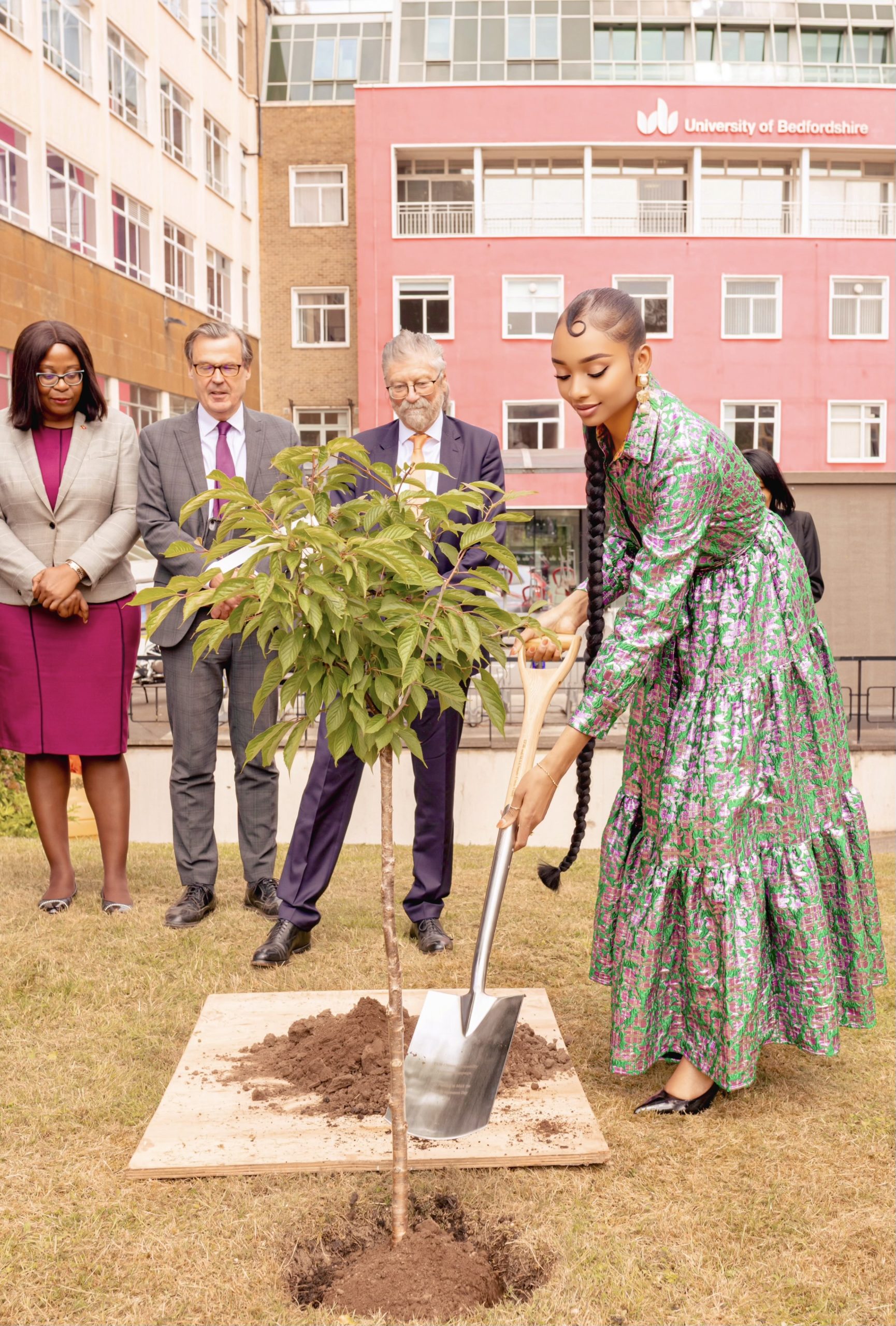
Symbolic acts of environmental stewardship formed a core part of the campaign. The tree planting exercise, conducted with staff, students, and community allies, was not merely ceremonial—it was a participatory declaration of shared responsibility for ecological restoration. This was followed by a Green Lunch, where discussions extended into practical ways to reduce environmental footprints. Equally inspiring was the student-led climate activism workshop, culminating in a silent march. The energy, creativity, and resolve of young change-makers highlighted that sustainability advocacy is most powerful when intergenerational voices converge.
Programming: From Strategy to Collective Action
The campaign was structured as a months-long programme, focusing on different dimensions of climate action:
- Climate Sustainability Workshop: Participants were introduced to the theme “From Awareness to Action: Mobilising Collective Efforts in Tackling Climate Change for a Sustainable Future”, engaging in interactive sessions that moved beyond rhetoric to provide practical tools for embedding sustainability in daily life and professional practice.
- Climate Crisis Advocacy and Digital Engagement. This week highlighted the role of advocacy and media in driving climate action. Through workshops, participants explored the power of digital platforms to mobilise communities and examined the legal and historical significance of protests in shaping systemic change. The week culminated in a Climate Sustainability Awareness March, where participants carried placards and made a public commitment to reducing carbon emissions.
- Tree Planting and Carbon Reduction Dialogue. Practical environmental action took centre stage with a tree-planting exercise, accompanied by discussions on strategies for carbon emission reduction and the wider significance of reforestation. The activities reinforced the message that small-scale actions, when multiplied, can contribute significantly to collective climate resilience.
- Survey and Impact Assessment. The final week focused on reflection and accountability. Participants completed surveys and action reports that captured their personal sustainability commitments and documented changes in attitudes and behaviours. This evaluative process provided a tangible measure of the campaign’s success in translating awareness into action. Survey findings and participant feedback demonstrate a significant positive impact on: increased knowledge of sustainability issues, heightened motivation for climate action, and measurable behavioural change in adopting eco-friendly practices.
Collaboration, Gratitude, and Institutional Support
The campaign was brought to life by the commitment of colleagues, students, and external partners. Special thanks go to Professor Andrew Church, Pro Vice-Chancellor, and Professor Rebecca Bunting, Vice-Chancellor, UBBS Dean Chris Marshall for their institutional support. Zoe Griffin for administrative support, including photography. Colleagues Rosie Munro, Ulrika Meegolla, and Katy Lelliott provided invaluable assistance, demonstrating how collaboration is the bedrock of successful advocacy.
Looking Ahead: Deepening the Intersection of Law and Sustainability
Past iterations of this campaign have already demonstrated their ability to increase awareness and engagement. With continued funding and expanded partnerships, the campaign aims to:
- Broaden its reach through digital platforms and community engagement.
- Strengthen its legal and policy dimensions, positioning law as a driver of sustainable governance.
- Equip participants with the tools to embed sustainability in their personal and professional practices.
As I reflect on the campaign’s impact, I am reminded of the words of mentors who often encourage me to: “Just keep going.” Indeed, this work is demanding, but it is also essential. Embedding sustainability in education, governance, and everyday life is no longer optional; it is the pathway to a just and liveable future.
The University of Bedfordshire’s 2025 Climate Sustainability Awareness Campaign stands as a testament to what can be achieved when awareness transforms into action, and when institutions commit to advancing climate justice at every level.
In Press:
Bedford Today, https://lnkd.in/enHQ_W3w
Leighton Buzzard News, https://lnkd.in/eTQp6Hdz
Milton Keynes News, https://lnkd.in/eHxZ_E7x
Luton Today, https://lnkd.in/eb2AX-3s