SLS International Law section event: The India-Pakistan tensions and international law
16th July 2025
Dr Solon Solomon (BUL)
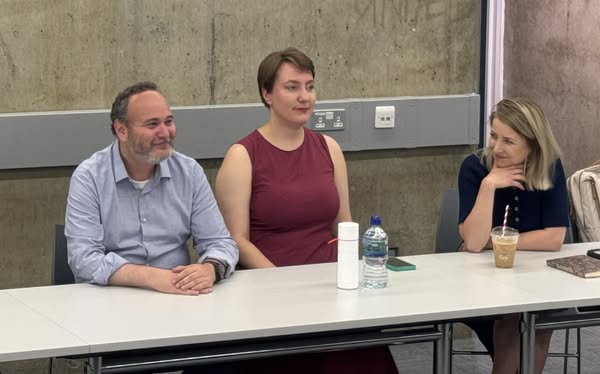
On 30 June 2025, Dr Solon Solomon (BUL) and Dr Saeed Bagheri (University of Reading), convened in central London an event on the India-Pakistan recent tensions and the role of international law. The discussion focused both on geopolitical as well as international law implications. On this account, topics that were raised included the India-Pakistan prospects for a future settlement of their differences, the fear of a nuclear confrontation, as well as whether the April 2025 attack in Indian Kashmir qualified as an armed attack able to trigger the right to self defence. The event also took into consideration whether the Kashmir status, where a Muslim-majority population was previously granted autonomy under the state auspices of India, could work in other parts of the world and world conflicts, with the granting for example of wide autonomy to the West Bank Palestinians as part of the State of Israel in the realms of a future settlement of the Israeli-Palestinian conflict.
The event’s main speakers were Dr Marion Messmer, an international security expert from Chatham House and Dr Tsvetelina van Benthem, an international law academic from the University of Oxford. The event was opened by Dr Solomon, who, after introducing the main speakers, proceeded to highlight the importance of international law and of the India-Pakistan conflict as part also of the wider conflict in the region between Israel and Iran. Dr Solomon additionally emphasized how the tensions between India and Pakistan underline issues relating to the use of force as well as the conduct of hostilities. Thus, apart from whether the attack against the Hindu tourists could qualify as an armed attack for the purposes of Article 51 of the UN Charter, Dr Solomon equally referred to the abeyance by India of the Indus Waters Treaty with the knowledge that such abeyance will leave no water to Pakistan and thus will result in devastating effects for the Pakistani population. In an era where the word ‘genocide’ is uttered in relation to situations of hunger and thirst, the question was posed whether—albeit legally it would be difficult to prove genocidal intent—in broader, geopolitical discussions, a genocide debate should accompany the Indus Waters Treaty abeyance. It was discussed whether such abeyance would constitute a crime against humanity.
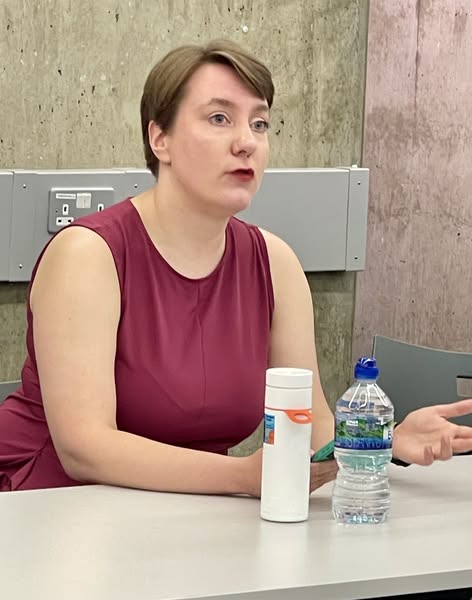
Dr van Benthem highlighted all these issues. With a unique clarity, she explained to the audience how international law views the use of force by and against non-State actors, the difference between customary and treaty law when it comes to the right to self-defence and whether such a right must be exercised only against a State entity. Dr van Benthem proceeded to apply the findings to the latest India-Pakistan tensions, meticulously examining the various scenarios and viewpoints.
Dr Messmer described the nuclear risks that an India-Pakistan confrontation entails. She noted how both sides are extremely polarised and any conflict management mechanisms that used to work in the past, do not currently function with the same efficiency. She also pointed out that the more tensions rise between the two nations, the more likely it is that one of the two countries will decide to use its nuclear arsenal. Dr Messmer brought to the table also how India and Pakistan have increased their hostile rhetoric against each other, and that one miscalculation could make the two sides consider resorting to the use of nuclear weapons. On this account, it was emphasised how important it is for the two sides to have crisis management protocols in place and to keep channels open in order to diffuse any border tensions.
The audience highly engaged with the event, asking the speakers further questions and the event closed with Dr Solomon announcing the further events to be organized by the SLS International Law section, most notably the Conference in November on ‘The U.S. and International Law in Changing Times.’